Our History
Before the castles, before independence, before the diaspora came home — a story of kingdoms, resistance, and a nation now leading a global reckoning.
Get Involved
It's the bird you'll see, wings forward, head turned back, in the symbols across this site. In Akan, it means: it is not wrong to go back for what you have forgotten. This page is that act.
A story in five chapters
Each era shaped the Ghana — and the diaspora — we work with today.
The first bridge
In 1815, a group of Swiss and German Protestants founded the Basel Mission in Basel, Switzerland. In 1827, its first missionaries reached the Gold Coast — nearly two centuries before this organization existed.
Andreas Riis, who led the mission's Gold Coast branch from Akropong from 1835, helped establish what became Ghana's first organized school system — from village primary schools to a Teachers' Training College — and in 1848 founded the Basel Mission Seminary, the country's first institution of higher education. In 1857, missionaries planted cocoa seeds from Suriname on mission land at Akropong. That crop went on to define Ghana's economy for the next 150 years.
We say this plainly: this was mission work under colonial conditions, and its legacy is genuinely mixed — real institution-building, tangled up with the same era's power imbalances. We're not the first Switzerland–Ghana bridge. We're building on one that's nearly 200 years old, complications included.
See how that relationship looks today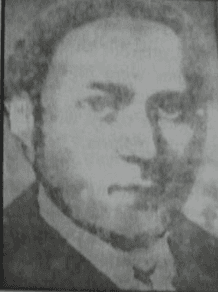
Rev. Andreas Riis, founder of the Basel Mission's Gold Coast branch (public domain)
Echoes across the Atlantic
Long before Ghana built a formal path home, the connection survived on its own — in names, in stories, and in one woman's memory carved into a nation's currency.
This isn't just history
In 2025, the African Union declared 2026–2035 the Decade of Reparations — and charged Ghana's President John Mahama to champion it globally. In March 2026, a Ghana-led resolution at the United Nations General Assembly named the transatlantic slave trade "the gravest crime against humanity," calling on nations to pursue formal dialogue on reparatory justice.
That same year, the African Union and CARICOM — the Caribbean bloc that includes Jamaica and Suriname — held their first joint meeting on reparative justice, formalizing exactly the Atlantic connection this page has been tracing all along.
A diasporan visitor learning this history today isn't just tracing the past — they're arriving as Ghana leads a live global movement for repair. It's part of why we build the programs we do.
See exactly where our programs fit this decadeWant to be part of this story?
Whether it's your first time learning this history or you've carried it your whole life, there's a place for you in what we're building.
Get Involved